Will Montreal learn from New York about protest and police?
Montreal Mayor Soraya Martinez Ferrada could take a similar approach to New York City Mayor Zohran Mamdani
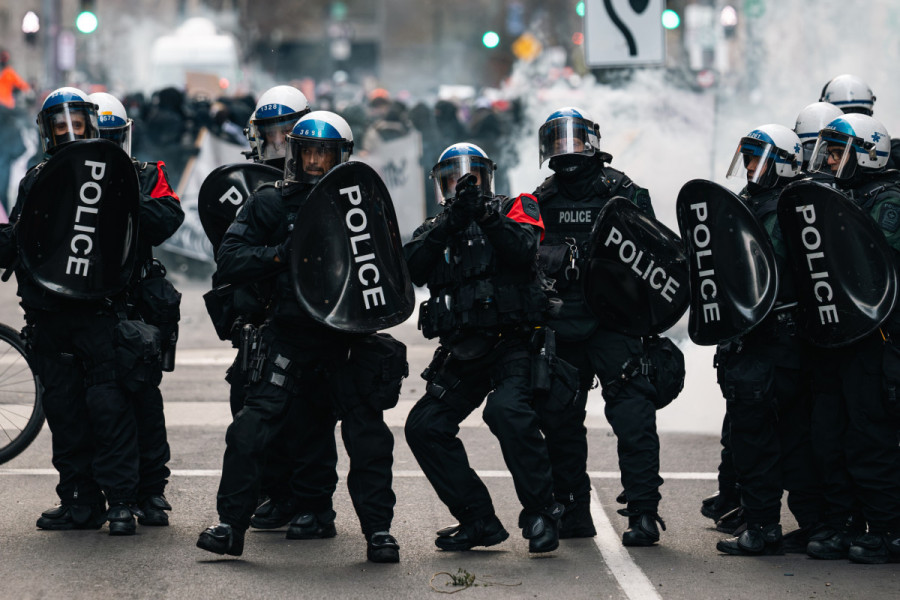
Montreal's police response to the Nov. 13 student protest came under scrutiny at a city council meeting on Nov. 16, where opposition councillors and citizens questioned the use of force against demonstrators.
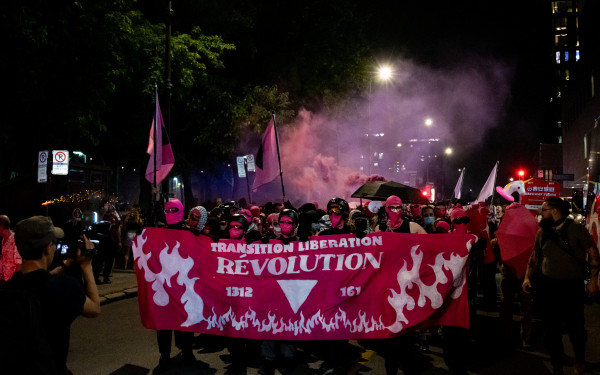
Thousands of protesters took to the streets on Nov. 13 to protest austerity in education. That day, Montreal police officers used tear gas, pepper spray and shields to disperse crowds. In the aftermath, protesters alleged that multiple injuries were caused by Service de police de la Ville de Montréal (SPVM) officers.
“Youth expressing their legitimate preoccupations in the street were literally gassed and shoved by hits of shields from the SPVM,” the leader of the official opposition, Marie Plourde, said on Nov. 16.
Plourde questioned the administration about police tactics used during the protests.
“These young people have used their right to protest to have their preoccupations heard. This right to protest is a fundamental right in our society,” Plourde said.
She questioned the police response to what she described as a peaceful demonstration, pointing to images of officers pursuing protesters through downtown Montreal.
Plourde then asked the administration if the methods used by Montreal police at the protest were consistent with its vision of the right to protest in Montreal.

Dimitrios J. Beis, member for Montreal’s executive committee responsible for security, defended the police response, citing reports of fireworks, projectiles and broken glass during the demonstration.
Beis recognized that while most protesters were protesting peacefully, some were responsible for the problems he alluded to.
“I think that [the SPVM teams] used what was necessary to protect [not only] the population, but also protesters,” Beis said.
Plourde mentioned the erosion of trust in the SPVM following the recent firing of seven officers due to alleged acts of racism, misconduct and discrimination.
She described how on Monday, New York Mayor Zohran Kwame Mamdani disbanded a New York City Police Department (NYPD) unit accused of using excessive force during protests.
In New York City, reforms now prohibit NYPD officers from using tear gas, kettling or long guns during protests and bar the use of pepper spray as a general crowd-management tactic. The city is also establishing new teams focused on communication and de-escalation.
Her second question about Friday’s protest was about this kind of approach to police reform and protecting protesters' safety.
“The student movement will not stop there. The protest[er]s should not be worried for their safety each time that they want to exercise their fundamental rights in the street. Does the mayor intend to draw inspiration from the New York Mayor’s approach to ensure everyone’s right to protest safely?” Plourde said.
Beis said they did not question the legitimacy of the protest or the reasons that led people to protest in the streets.
“The images that we all saw on social media show a part of this interaction, but the only thing I can say is that the teams are trained to intervene in those cases. And that’s exactly what they did [...] last Friday,” Beis said.

In New York, Mayor Mamdani’s NYPD-related decision on Monday came from an electoral promise that aims to separate counterterrorism and protest responses. CNN reported that the Strategic Response Group (SRG), which was responsible for responding to protests, was dismantled following accusations of excessive force.
According to the Office of the Mayor of New York, this reform establishes “a first-of-its-kind, civilian-led Community Dialogue and De-escalation Division (CDDD) within the Mayor’s Office of Community Safety and improve[s] the NYPD’s protest response through a specialized dialogue team, the First Amendment Support Team (FAST), within the department’s Community Affairs Bureau.”
The civilian-led division will coordinate with a specialized NYPD dialogue team, while a separate patrol unit will handle crowd-management responsibilities when necessary.
The Link reached out to Mamdani’s office but did not receive a response at the time of publication.
Later, during the question period, citizens and The Link asked questions about potential injuries allegedly caused by police officers during the protest.
Citizens also showed printed images of what they said were injuries at the protest, which were allegedly claimed to be caused by Montreal police.
In response to The Link’s first question about injuries and police response, Beis first applauded the students who marched peacefully for taking a stand. He then said he would direct some of the questions to the SPVM and highlighted the importance of security.
“I sympathize with what you mentioned tonight and your injuries, and those [who] also succumb to some of that. But you have to understand that security, above all, is what is necessary in these types of situations when they degenerate,” Beis said.
The Link mentioned Mamdani’s decision in a follow-up question. Beis said he was not aware of the decision. He did acknowledge that a larger discussion would need to be had with the SPVM regarding measures used in protests.
The SPVM media relations team said in an email to The Link on Nov. 18 that it preferred not to comment on Beis’s answers at the meeting, as he is outside the organization.
The SPVM also said no injury was reported to them during the protest.
The Coalition de résistance pour l'unité étudiante syndicale (CRUES) published a statement on Instagram on Monday about Friday’s alleged acts committed by the SPVM.
“We denounce police violence, those of last Friday just like those that happen on a day-to-day basis and far from cameras, against people that are living already marginalized,” the statement read.
CRUES reported at least 15 injured at the protest and that some people were hospitalized. The organization said that this police intervention was not isolated and was part of a large history of repression of mobilizations.
Montreal police said in an email that “the SPVM does not compile this type of data (injured protesters).” The SPVM said it encourages those who said they were injured by police personnel to file a complaint.
The Link also reached out to the office of Montreal Mayor Soraya Martinez Ferrada but it said it did not have time to reply to the request.
Québec solidaire (QS) made a statement on Monday, Nov. 16 about the police methods used on Nov. 13. A video appears to show a SPVM officer shoving former QS co-spokesperson Manon Massé and other protesters during the protest.
“The SPVM has some explaining to do,” QS said in its statement.
With files from Cléo Clamen and Matthew Daldalian