Canada’s breaking point is a general strike
Amid historic inequality, it is time for workers to withhold their labour

Income inequality in Canada has reached the highest level ever recorded.
As of 2023, 69.2 per cent of Canada’s net wealth is owned by the top 20 per cent of Canadian families.
Canada’s 100 highest-paid CEOs receive, on average, 248 times the salary of the average worker, meaning that they make the average worker’s entire annual salary in just over a single workday.
CEO pay has increased by 49 per cent from 2020 to 2024, while the average worker’s salary has increased by a meagre 15 per cent, less than the 22 per cent increase in grocery prices that occurred in the same period.
Amidst this ongoing affordability crisis caused by rising costs and falling wages, 56 per cent of Canadians reported living paycheque to paycheque in 2024. Canadian food banks recorded 2.2 million monthly visits in 2025, double the monthly usage recorded in 2019.
The housing crisis shows a similar story.
In Montreal, the average asking rent for a two-bedroom apartment increased by nearly 71 per cent from 2019 to early 2025. Nationally, the average asking rent increased by nearly 25 per cent from May 2019 to May 2024. Alongside this, the total population across Canada experiencing homelessness on any given night has almost doubled from 2018 to 2024.
Canadians are struggling to make ends meet and survive.
As the same neoliberal politicians who allowed this crisis to occur continue to fail us, we are left with only one feasible solution: a general strike.
General strikes are broad, multi-sector labour actions in which swaths of workers withhold their labour together in solidarity. The most powerful weapon that the working class has is our collective labour. If we withhold it, society screeches to a halt.
The people who keep society and the economy running are not wealthy politicians in parliament or overpaid CEOs in boardrooms. They are retail workers, teachers, nurses, factory workers, electricians and welders. They are working-class people who can and should withhold their labour when they are not being compensated for it.
General strikes have historically been one of the only successful methods for the working class to fight back and win economic security. In Canada and abroad, they’ve repeatedly forced change when politicians fail us and protect the greed of the ruling class.
Historically, we’ve seen that power at full scale.
In France, the May 1968 general strike began as a student revolution before it erupted into a nationwide shutdown of over 10 million workers. Factories were seized. The government nearly collapsed.
And while it didn’t result in a full-blown socialist revolution, it still produced what “reasonable politics” rarely delivers: major wage increases, stronger unions, better working conditions and lasting social shifts, including momentum for movements like the sexual revolution and the women’s movement.
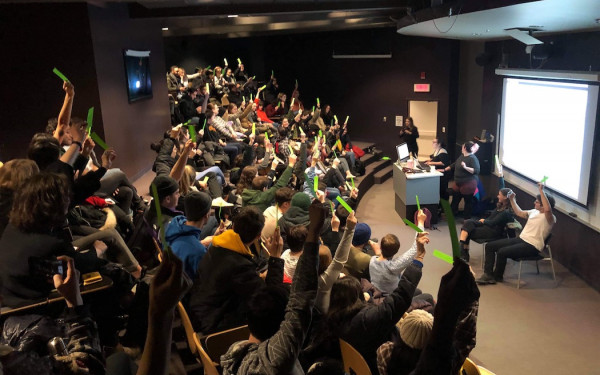
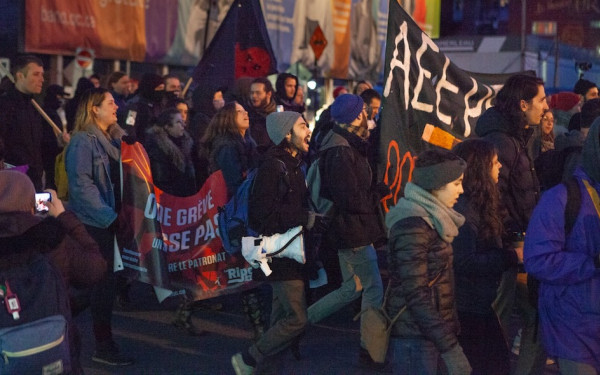
The same lesson shows up closer to home. In 2012, Quebec students didn’t win by politely disagreeing or writing letters to the minister. Hundreds of thousands of students held votes to go on strike and protest day after day for months, until the province had no choice but to fold and cancel the proposed tuition hikes.
Even autocrats have to negotiate when their countries become ungovernable. Russia’s 1905 general strike forced Tsar Nicholas II to implement a constitution, guaranteeing Russians civil liberties and the right to vote, and creating an elected legislative body.
And the 1975 Iceland women’s general strike proved just how much of society runs on labour that rarely gets recognized, let alone rewarded.
Nearly 90 per cent of women across the country stopped working, both paid work and unpaid work at home, refusing to participate in housework or childcare in protest of gender pay inequality and discrimination. Within a year, parliament passed equal pay legislation. Five years later, the country elected the world’s first democratically-elected female president.
Sometimes, even the mere threat of a general strike can be enough to create change. In 2022, Ontario’s government repealed the anti-labour Bill 28 just days after passing it in response to tens of thousands of workers planning a general strike.
General strikes have always been the moment people stop asking and start taking back power. Voting for ineffective politicians every four years and writing strongly-worded letters doesn’t work, and it is exactly what has gotten Canada into this affordability crisis. Canadians are desperately struggling to keep food on the table and a roof over their heads, and there is no end in sight unless we take action.
It is time for people across the country to unite in solidarity, to go on strike and take the power back.
This article originally appeared in Volume 46, Issue 8, published January 27, 2026.